 David Tuite
News
Backstage Maintainers Want Your Input on 2026 Roadmap
The maintainers opened a GitHub discussion asking what you want prioritized in 2026. Four themes have emerged:
Performance and Reliability: Core performance improvements, better memory management, and stability at scale. This matters if you're running Backstage for hundreds or thousands of engineers.
Scaffolder Enhancements: Better workflows, clearer form UX, and debugging tools that actually help. If you've wrestled with template errors, this should interest you.
Tech Stack Modernization: React 19, TypeScript 5.7+, and modern bundling. This isn't just version bumping, it's about making Backstage easier to extend and maintain.
Security Improvements: Enhanced auth patterns and security features. Given the sensitive data Backstage handles, this is overdue.
The discussion is active now. If you have strong opinions about what needs fixing or improving, add them there.
BackstageCon Europe: March 23 in Amsterdam
BackstageCon Europe 2026 happens March 23 in Amsterdam, co-located with KubeCon + CloudNativeCon Europe.
Sponsorship deadline is February 2. Registration is open .
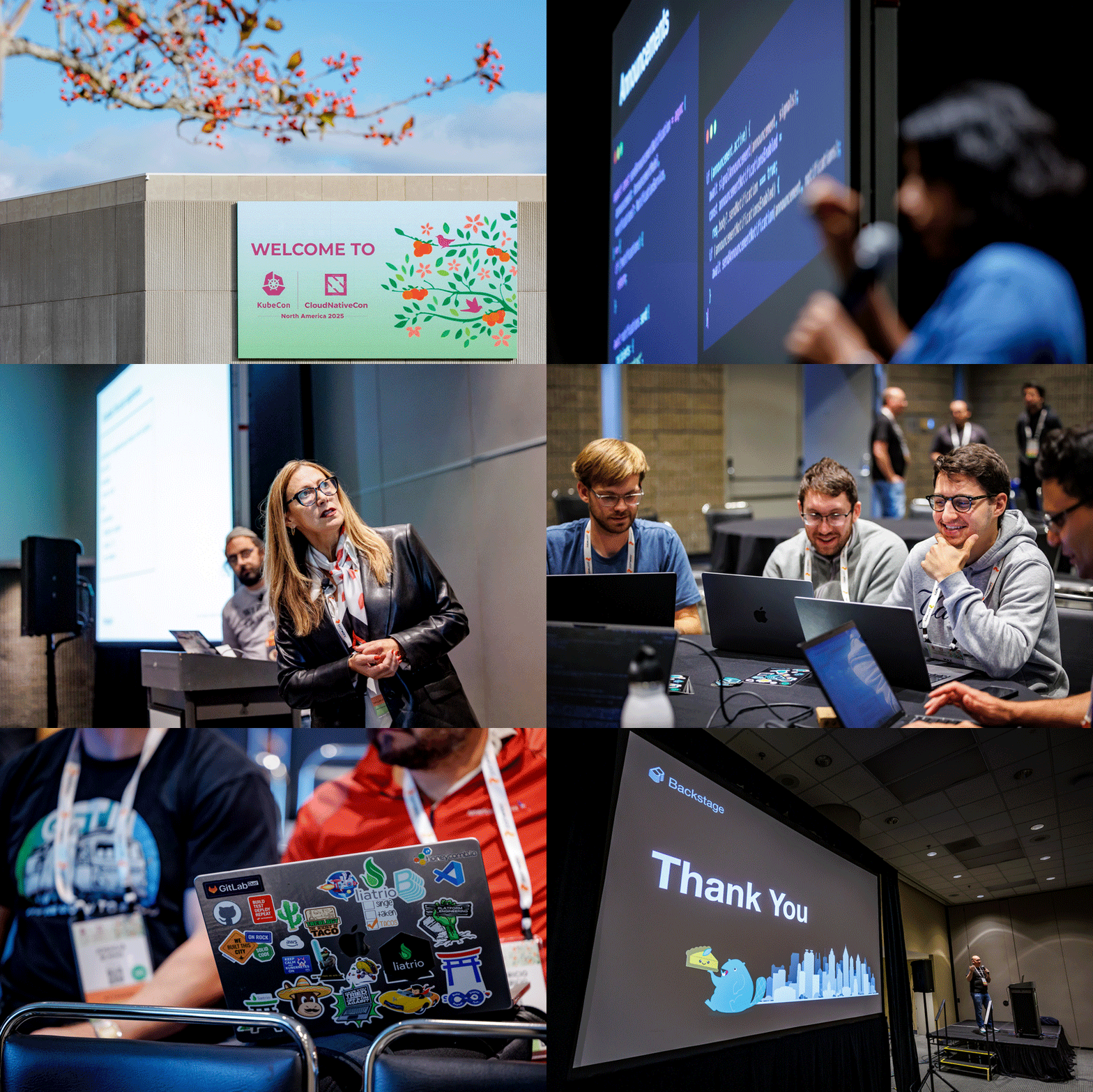
Backstage Ranks #5 in CNCF Velocity
The CNCF's 2025 Annual Survey ranks Backstage as the #5 CNCF project by velocity. The CNCF project page shows the current metrics:
- 46,063 total contributors
- 13,506 contributing organizations
- $125.1M estimated software value
- Health score: 82 (excellent)
Backstage Changelog
v1.48.0-next.0 Pre-Release
Released January 27 , this pre-release packages the latest features heading into v1.48.0. The full changelog has details.

v1.47.0 Breaking Changes and Updates
v1.47.0 shipped January 20 with 103 PRs from 40 contributors. Here's what breaks and what improves:
Table Component Redesign
The Table in @backstage/core-components got rebuilt. If you use custom columns or cell renderers, they need updates. The new version performs better and gives you more control over pagination.
Check the release notes for the migration guide.
Blueprint Component Deprecations
Blueprint.js components are being replaced with Material UI equivalents. The deprecation warnings tell you what to use instead. This isn't urgent but plan for it.
GithubOrgEntityProvider Performance Fix
The GitHub org provider now does incremental updates instead of full refreshes. If you ingest hundreds of repos, this matters. Update your config to enable it.
AWS S3 Auth Priority Change
The URL reader now uses explicit credentials before falling back to environment variables. If you're using S3 for TechDocs storage, verify your auth setup still works.
URL Reader Redirect Validation
Redirects now get validated to prevent security issues. This might break integrations that rely on redirect chains. Test your setup after upgrading.
Kubernetes Plugin Backend Migration
New backend modules are available for the Kubernetes plugin. The old approach still works but follow the migration guide to move to the new system.
Docker Image Updates
v1.47.0-next.2 moved to Node 24 and Debian Trixie. The Docker deployment docs show the new node:24-trixie-slim base image.
Community Discussions
Release Updates: v1.47.2 Fixes Zod Issues
A new patch release, Backstage v1.47.2, has been published. This is a critical update as it fixes a breaking Cannot find module 'zod/v3' error that affected users on 1.47.1 and caused automated version bump processes for community plugins to fail. The issue stemmed from work to migrate to Zod v4 leaking into the release.
- Fix: The patch restores dependency on a specific version of Zod.
- API Factory: It also rolls back immediate breaking changes regarding API factory conflicts, converting them to deprecation warnings instead.
- Community Plugins: Following this fix, the automated version bump process for community plugins has been re-triggered and is back to green.
See the release notes or view the discussion in #maintenance .
Managing Community Plugin Updates
There was an insightful discussion in #plugins regarding how community plugins are released and upgraded:
- Release Process: Once a functionality PR is merged, a "Version Packages" PR is generated. The new version is only published to NPM after that second PR is merged.
- How to Update: Running the standard
yarn backstage-cli versions:bumpdoes not update community plugins by default. To bump these packages manually without Renovate, use:yarn backstage-cli versions:bump --pattern "@backstage-community/*"
DevTools and Scheduler Configuration
In #general , users discussed configuring devtools.scheduledTasks.plugins. Current findings suggest that Catalog, Search, and Notifications are the primary plugins supported in this configuration section.
Technical Q&A Highlights
Several technical patterns were debated in #general :
- Config outside React: Users looking to access app config outside of React components (without
useApi) were pointed towarddefaultConfigLoader.tsas a reference implementation. - Migration Rollbacks: There is an active issue regarding rolling back
backend-defaultsscheduler migrations (20250411000000_last_run.js). The standard Knex rollback commands are failing with a "migration directory corrupt" error because the file references tables not strictly bound to the expected database context. - Tag Validation: A reminder that the Catalog currently enforces lowercase tags; uppercase tags in
catalog.ymlwill fail registration.
From the Roadie Blog
Creating Backstage EntityProviders at Runtime
Brian Fletcher's runtime EntityProviders guide shows how to build a provider pooling pattern. The key idea: pre-register providers at startup, then assign them to consumers at runtime.
This pattern enables:
- Multi-tenancy (different teams, different data sources)
- User-defined integrations without code deployment
- Self-service onboarding
- Dynamic provider registration
If you're building a platform where users define their own integrations, this pattern solves the "restart the backend every time someone adds a data source" problem.
The Real Cost of Self-Hosting Backstage
A recent build vs. buy analysis from Roadie breaks down what self-hosting actually costs. Not just infrastructure, the engineering time to maintain it, upgrade it, and keep it secure.
The analysis covers:
- Real infrastructure costs (compute, storage, networking)
- Hidden maintenance costs (upgrades, plugin updates, security patches)
- Opportunity cost (platform team time vs. product work)
- When self-hosting makes sense vs. when managed makes sense
If you're evaluating Backstage deployment options, this gives you the framework to calculate total cost of ownership.
That's this week's Backstage Weekly. See you next week.
