News
👋 Welcome to Backstage Weekly 134.
TL;DR
This week we published on the enforcement layer missing from every current agent stack. Backstage v1.51.0-next.3 ships with scaffolder template grouping and catalog index-driven sorting.
Backstage update
The v1.51 pre-release cycle continued with v1.51.0-next.3 on May 12. Four items worth flagging:
- Scaffolder gets template grouping - the template list page now supports custom template groups, so platform teams can organise templates by team, workflow type, or whatever taxonomy makes sense.
EXPERIMENTAL_formDecoratorsis also renamed toformDecorators; update your scaffolder config if you're using that field. @backstage/[email protected]restructures entity listing to use index-driven sorting, removing full-table-scan patterns that affect large catalog deployments.@backstage/[email protected]adds a DatePicker component built on React Aria with full keyboard and screen reader support.@backstage/backend-plugin-apiships an alphaTracingServicefor unified trace span emission across backend plugins. Migration steps are in the upgrade helper at backstage.github.io/upgrade-helper .
From the Roadie blog
We published The Agent Stack's Missing Layer this week. The starting point is the PocketOS database deletion from late April: an AI coding agent (Cursor running Claude Opus 4.6) deleted a production database in nine seconds because of an architecture gap at the integration boundary.
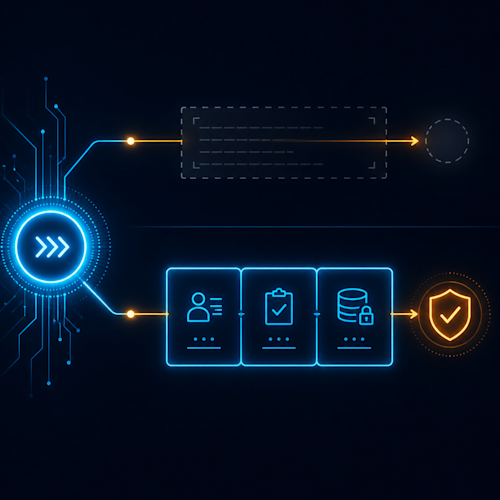
The piece frames the current agent stack as three layers - model, prompt, and enforcement at the integration boundary. The first two were present in the PocketOS setup and performed as designed. The third was missing. That's the argument: when a model can reason about your safety rules, those rules are just text. Text doesn't bind.
The missing enforcement layer has a concrete shape - tokens scoped to the minimum operations a task requires (a domain-management credential shouldn't carry volume-delete authority), API gateways that require out-of-band confirmation before destructive calls, and backups stored outside the blast radius of what they protect. None of these are new ideas. They're how production systems already work for human operators. The gap is that they haven't been applied to agent operators yet.
If you're running production data behind any provider that gives agents a credential, the piece is a useful framing for the infrastructure conversation your team should be having. Read it on the Roadie blog
